Core

Types of Traditional Chinese Fans

Traditional Chinese fans fall into five families — folding, round, feather, palm-leaf and ceremonial — each with its own name, shape and story, plus material variations in paper, silk and bamboo.

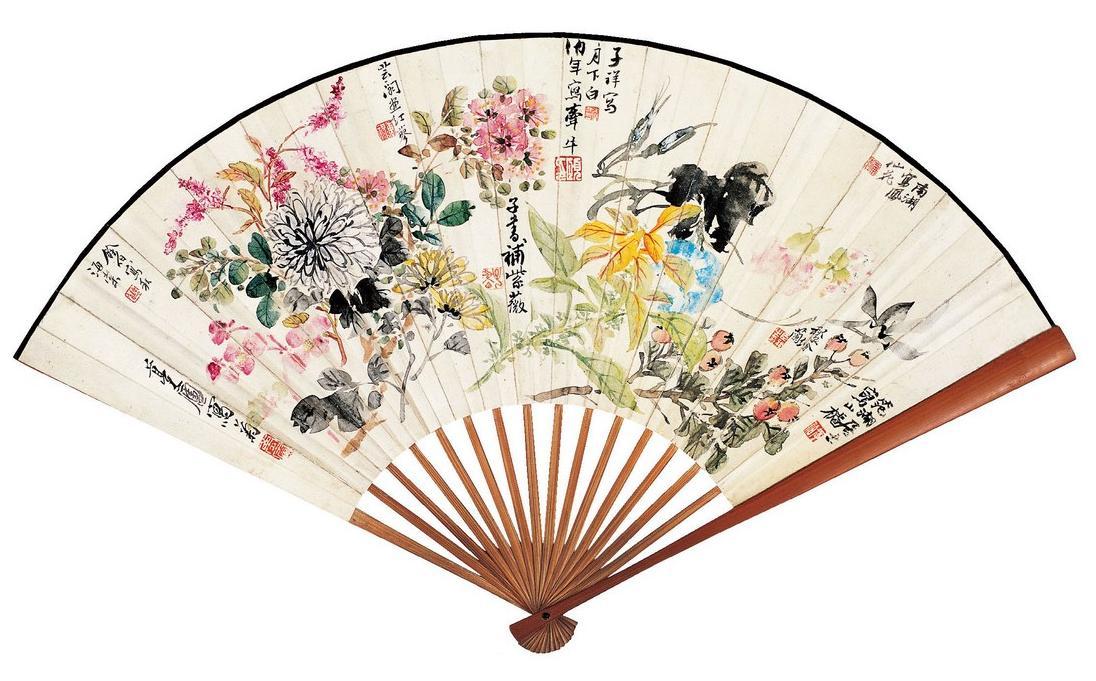
Hand-painted Chinese folding fan with floral motifs

In this guide, “Chinese fan” refers to the traditional hand fan (扇子) — not fan culture or the surname Fan.

What this guide covers

The outline

  1. 01The folding fan (zhéshàn)
  2. 02The round fan (tuánshàn)
  3. 03Paper, silk, bamboo and feather fans
  4. 04Ritual and ceremonial fans
  5. 05How types changed across dynasties
  6. 06How to choose a type for yourself
  7. 07Frequently asked questions

Section 01

The folding fan (zhéshàn)

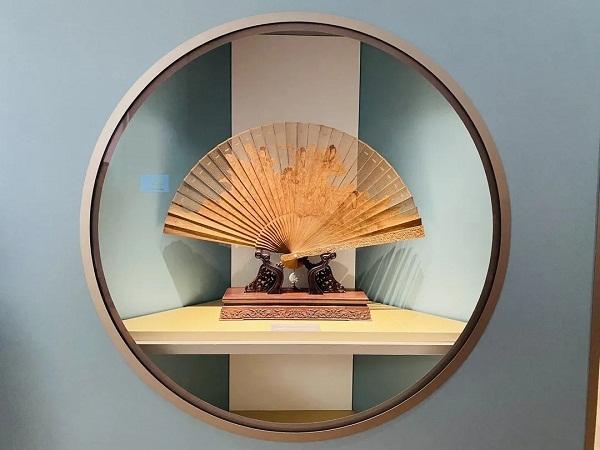
The Chinese folding fan is the collapsible pleated fan — bamboo or wooden ribs, a paper or silk leaf, and a single rivet that lets the whole fan fold flat. It is the type most associated with scholars, painting and calligraphy, and the one Western collectors usually mean by “Chinese fan.”

It appeared at the Chinese court through tribute and trade from Japan and Korea, then became the signature accessory of Ming and Qing literati, who kept it in the sleeve and painted on it like a tiny scroll.
Section 02

The round fan (tuánshàn)

The Chinese round fan is a fixed circular fan, typically silk or gauze stretched over a frame and mounted on a handle. Its shape is a moon, and in Chinese it is simply tuánshàn (团扇), “round fan.”

Round fans were the dominant court fan from the Han through the Tang dynasties, carried by palace women and painted with flowers, birds and figures. The Han poet Ban Jieyu wrote the most famous poem about one — comparing herself to a silk fan that may be put away when summer ends.

Classical Chinese round silk fan (tuánshàn) with a painted scene
The round fan — tuánshàn — was the court fan of the Han and Tang dynasties.

Section 03

Paper, silk, bamboo and feather fans

Beyond shape, Chinese fans are described by material, and each material page covers its own tradition:

  • Paper fans — light, affordable leaves, printed or painted; the everyday folding fan.
  • Silk fans — soft, luminous surfaces, hand-painted and often round.
  • Bamboo fans — the classic rib material, prized for spring and durability.
  • Feather fans — ceremonial and operatic, from goose feathers and crane feathers.

Section 04

Ritual and ceremonial fans

Not every Chinese fan is meant to cool. The ceremonial fan, zhǎngshàn (掌扇), is a large fan on a long handle, carried in pairs beside an emperor or in ritual processions — a visual statement of rank rather than a tool for air. Feather fans also served ritual and military imagery: the strategist Zhuge Liang is inseparable from the goose-feather fan he waved while planning campaigns.

These ceremonial uses feed directly into Chinese fan traditions of gift-giving, dance and opera. See Chinese fan traditions for how fans behave in ritual and performance.

Section 05

How types changed across dynasties

EraDominant fans
Ancient (Shang–Han)Feather and palm-leaf fans, ceremonial fans
Han–TangRound silk fans (tuánshàn) at court
Song–YuanFolding fans arrive through tribute and trade
Ming–QingFolding fan peak; sandalwood and export fans
TodayAll types — craft, souvenir and performance
Which fan dominated each era

The long view — from ritual feathers to the scholar's folding fan — is told in the history of Chinese fans.

Section 06

How to choose a type for yourself

  • Daily cooling — a palm-leaf fan or a simple paper folding fan.
  • Gift — a folding fan with a symbolic motif, matched to the recipient.
  • Dance or performance — silk round fans, which read beautifully on stage.
  • Collecting — antique, sandalwood or finely carved fans.
  • First fan — a paper folding fan: cheap, forgiving and easy to open.

For occasions, our Chinese fan gift guide matches fans to weddings, festivals and birthdays; for the decision process itself, start with how to choose a Chinese folding fan.

Section 07

Frequently asked questions

How many types of Chinese fans are there?

Chinese fans are usually grouped into five families by shape: the folding fan (zhéshàn), round fan (tuánshàn), feather fan (yǔshàn), palm-leaf fan (púshàn) and ceremonial fan (zhǎngshàn). Within each family there are many material variations — paper, silk and bamboo being the most common.

What is the oldest type of Chinese fan?

Feather and palm-leaf fans appear earliest in Chinese records, and long-handled ceremonial fans are attested from the earliest dynasties. The round silk fan (tuánshàn) was the dominant court fan from the Han dynasty, well before the folding fan became popular.

Which Chinese fan is best for a gift?

The folding fan is the most common choice because its painted motifs carry specific wishes — purity, longevity, success — and it fits the tradition of giving fans as tokens of respect. The Chinese fan gift guide explains how to match motif and material to the occasion.

What is a Chinese fan called?

The general Chinese word is shànzi (扇子). Specific types have their own names: folding fan (zhéshàn), round fan (tuánshàn), feather fan (yǔshàn) and palm-leaf fan (púshàn). See what a Chinese fan is called for the full vocabulary.