Section 01
More than a cooling tool
The first answer is the obvious one: before electric fans and air conditioning, a fan was how you survived a Chinese summer. Palm-leaf fans (púshàn, 蒲扇) were the everyday answer — cheap, sturdy and effective — and even emperors waved fans, or had them waved for them.
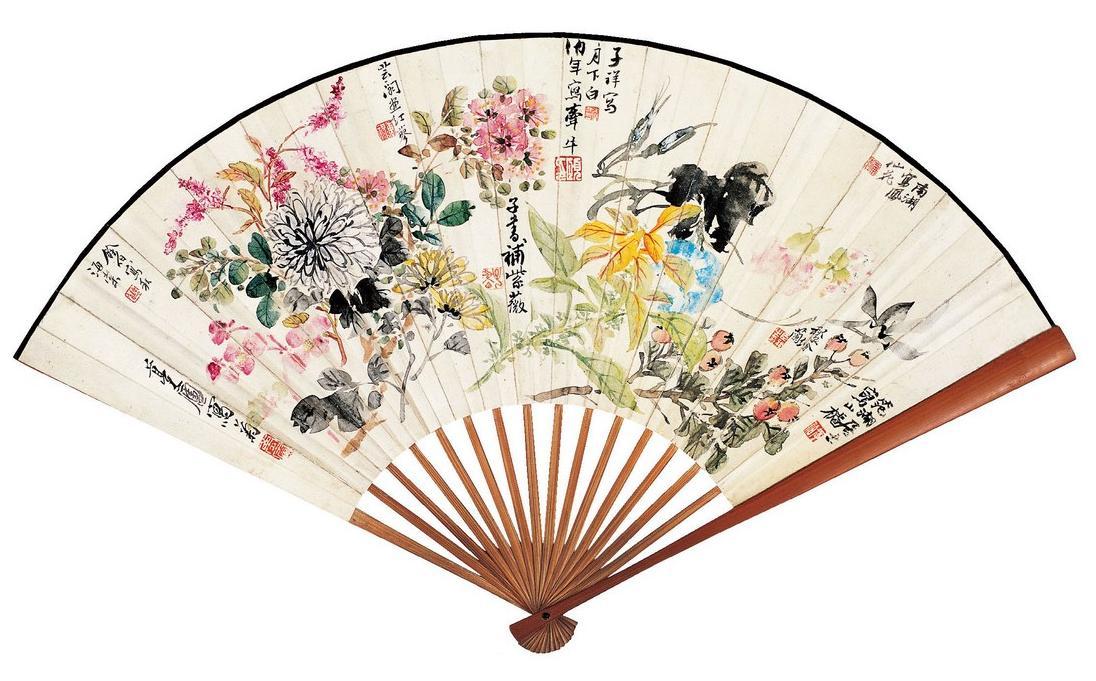
But cooling alone never explains the fan's place in Chinese culture. A tool that only cools does not get painted, calligraphed, exchanged as a gift and carried in opera. The real question is why the fan became art — and the answer starts with status.
Section 02
Status and the scholar
Fans marked rank from the earliest courts, where attendants carried the long-handled ceremonial fan (zhǎngshàn, 掌扇) beside the emperor. The scholar class took the same logic and made it personal: a Chinese folding fan in the sleeve said education, taste and membership in the literate world.
A scholar's fan was also a conversation piece. Who painted it, what poem it carried, how the ribs were carved — these were ways of displaying learning without saying a word. The fan did for the Ming literatus what a watch, a briefcase or a signature accessory does today.
Section 03
Etiquette and body language
The fan also worked as a tool of gesture. Held still, it was a prop of composure; waved slowly, it made a point; snapped shut, it could end one. In dance and opera, performers use the fan to express shyness, teasing, anger or joy without dialogue — the fan becomes a second face.
For the beginner, the practical side matters first: how you hold and open the fan is covered in how to hold a Chinese fan and how to use a Chinese fan.
Section 04
Ritual, dance and performance
Fans are built into Chinese ritual and performance. Court ceremonies used ceremonial fans as mobile symbols of authority. Folk performance built whole dances around them — the fan dance, where a silk or paper fan becomes the visual center of the movement — and tai chi has a full form practiced with a fan, the tai chi fan (太极扇).
These traditions are why the fan never disappeared when air conditioning arrived: it is not a machine for cooling, it is a piece of culture you can practice. The living customs are collected in Chinese fan traditions.
Section 05
Fans in literature and opera
Chinese literature and opera gave the fan its most famous owners. The strategist Zhuge Liang is inseparable from the goose-feather feather fan he waves in portraits and opera. In Chinese opera, a character's fan announces the role: scholars carry folding fans, generals may carry larger or stiffer fans, and the way the actor handles it reveals personality.
Poetry, meanwhile, turned the fan into an image. Ban Jieyu's round silk fan became the symbol of the neglected wife; later poets reused the folding fan as a token of friendship and parting. The history of Chinese fans traces these literary lives.
Section 06
Why fans are still used today
- Practice — tai chi fan and fan dance keep the fan a physical discipline.
- Performance — opera, folk dance and stage design still need real fans.
- Ceremony and gifts — weddings and festivals use fans for their blessings.
- Craft — workshops in Suzhou and Hangzhou keep handmade fans alive.
- Identity — for the Chinese diaspora, the fan is a portable piece of culture.
If you are considering your first fan, the practical entry point is a paper or bamboo folding fan — affordable, easy to open and forgiving. The types of Chinese fans page helps you pick the right one for your purpose.
Section 07
Frequently asked questions
Why did Chinese people use fans?
Chinese people used fans first for cooling, but the fan quickly gained social meaning: it marked rank at court, signaled education among scholars, and became a tool of gesture, dance, opera and ritual.
Why did Chinese scholars carry fans?
Scholars carried folding fans because they were practical — they folded into the sleeve — and artistic, offering a surface for painting and calligraphy. The fan also signaled education and taste.
What is tai chi fan?
Tai chi fan (太极扇) is a tai chi form practiced with a folding fan. The fan extends the practitioner's reach and adds visual drama, and the form is popular in China and among Chinese communities worldwide.
Do people still use Chinese fans?
Yes. Fans are still used in tai chi, fan dance, opera and ceremony, and they remain popular as gifts. Handmade fans are still produced by traditional workshops, alongside printed fans for everyday use.